The 1970’s brought a lot to pop culture: rock and roll, disco, flared jeans and platform shoes. What a time to be alive! They also brought us the infamous, powered-by-flower…
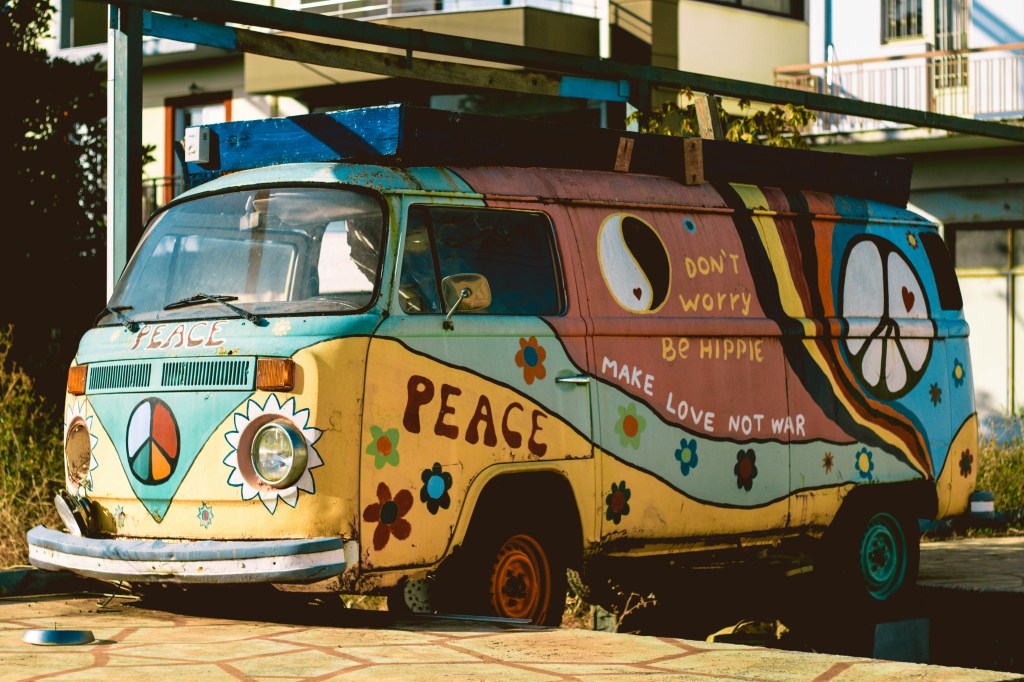
…HIPPIES!
Not only did recreational drug use increase during the 70’s, but did you know this was also a booming time for backpacking? With the expansion of the travel industry, the youth who saw themselves at the center of alternative culture took the time’s inspiring messages quite literally to, “fly like an eagle”. Thousands found themselves following a path of marked cities, on a road that glistened with hopes of enlightenment, freedom, and love…and maybe also a disco or two.
After all, to be a hippie one had to “take it easy, man”.
A movement inspired from the beatnik generation that arose as a subculture in 1950s America, many found the desire for this type of exploration, with low budgets and authentic immersion, from the original hitchhiker himself, On the Road author, Jack Kerouac. With his tales of roaming and enlightenment, the dubbed, “Hippie Trail”, found its popularity amongst Westerners searching for something more than tourism.
Although inspired by the curiosity of the “Eastern culture and spirituality”, author David Tomory asserts that the main reason hippies took to the trail was influenced rather by a search for freedom from the “moral and social restraints of their home”. Many used the map as a way to guide them on their quests to becoming more educated about their world, both personally and spiritually. Of course the romanticism of meeting a soulmate halfway across the world on a brightly colored bus also kept the movement strong.
The only requirement to go? To be as frugal as possible!
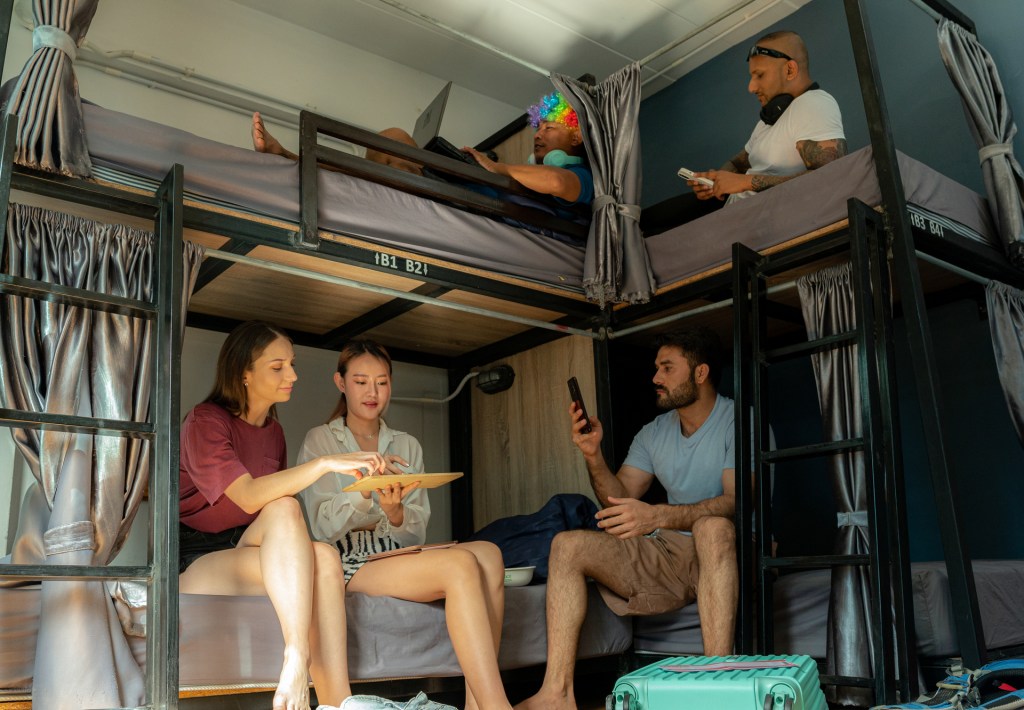
Typically taking off from either London, Amsterdam, Berlin or Paris, the route took free-spirited youth across the Middle East into West and South Asia. Through trains, “magic” buses, or plain ol’ hitchhiking, thousands followed along the now established Hippie Trail. This mass demand led to the popularization of inexpensive accommodations; the gems we call Hostels!
The trail, notarized by word-of-mouth budget hostels and cheap restaurants, created pockets of travel cohorts in each of the cities. These buzzing social networks, dependent upon social interaction, helped thousands of wanderlust-stricken explorers discover the teachings of the open road.

The trail could be modified for anyone’s personal interests, but there were key cities that became notable stops. Istanbul, the door to the East, followed by Tehran, Kabul, Kathmandu, Goa, and Bangkok, as well as the lesser known towns like Manali and Kuta. All began to see their streets scattered with curious-minded and abstract Westerners. There is no doubt that those who found themselves on the Hippie Trail, and those native to the cities, were irrevocably changed by their new diverse discoveries.
According to Rolf Potts, some popular hostels and shops of the time were, “Gulhane or Yener’s in Istanbul; Amir Kabir in Teheran; the whatsisname in Kabul; the Crown in Delhi; the Modern Lodge in Calcutta; the Matchbox and the Hotchpotch in Kathmandu”. Another infamous spot was Lale’s Restaurant, nicknamed along the trail as “The Pudding Shop”, this Turkish restaurant is still open today. Affixed with a board of notes for passing lovers (and their apologies), and a garden for impromptu jam sessions, it quickly became a staple meeting-place for those following the trail.
Beyond just a bed, these spaces became the very pots that began to melt away political and cultural divides. Offering social atmospheres, these local businesses saw a steady flow of guests, and became the beneficiaries of what little money folks did spend along their way.
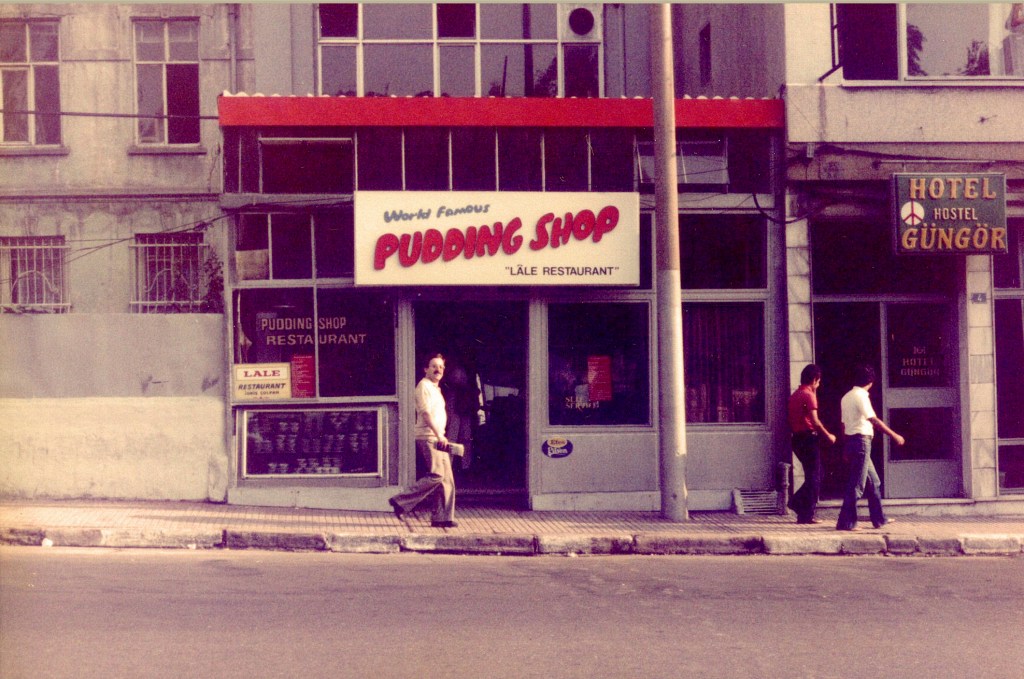
After political disturbances and policy changes, the open door policy found itself shut upon Western Travelers by the end of the 70’s. The infamous Hippie Trail and the message it’s users were sending, became quieter in the decades passing. Changes in social culture also lessened the initial charge of exploring the world on foot -or wheels.
The small phenomenon of the “Hippie Trail” was many things, and not as entirely magical as the vintage pictures can make it seem. There was danger, disownment, and delusions amongst it all, but nonetheless, tales of love and enlightenments definitely managed to sprout up from these personal journeys, with some even making theirs a forever one-way trip.

Travel gives us all the chance to learn, but most importantly, to be changed from our journeys. From cultural exchanges, to serendipitous moments, and finding hospitality in the most hidden corners of the world, travelers, whether new or wise, all find themselves as students when following along the spiraling trails of “enlightenment”.
If you are looking for more primary accounts from the intriguing trail, a beautiful autobiography from the writer of quests himself, The Alchemist author, Paulo Coelho, tells his own experience upon the Hippie Trail in the 1970s. His words immerse you in a sort of time travel back to this age of exploration, in the 2018 novel titled, “Hippie”. Or if you are looking for multiple accounts of Hippie Trail travelers, one should also read “A Season in Heaven: True Tales of the Road to Katmandu” by David Tomory. One more to mention is “Odyssey: Ten Years on the Hippie Trail” by Ananda G. Brady, who spares no detail of his extensive time as a backpacker.
Warning! Reading these stories will increase your risk of booking a trip after!
The “Hippie Trail” route became feasible for travelers again in the mid 2000s, with many of today’s backpacker circuits pinned with destinations directly influenced from the Hippie Trail.
Have you had the chance to travel the Hippie Trail? Were you one of the original Hippies? Let us know your experience below or send us a story to be featured!
The hippie trail was instrumental in the evolution of beyond-bed in our beloved hostels that we know today. Help us make it even better and join our beyond-bed movement at HandyHostel!


 Beyond-Bed Talk
Leave a comment