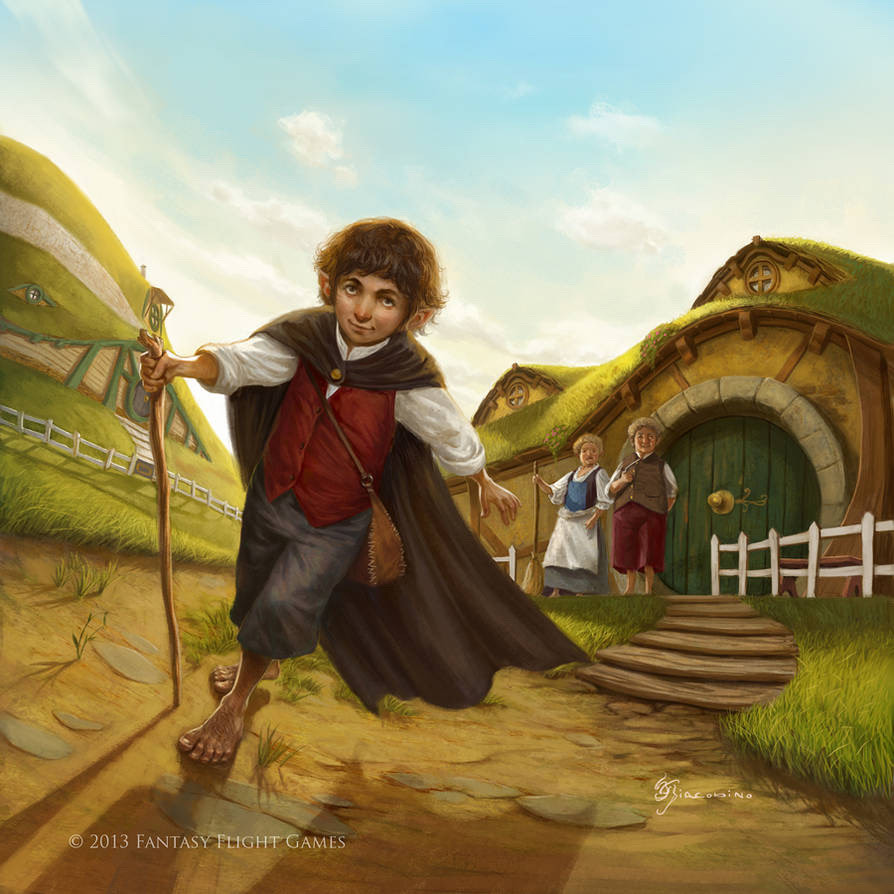
“A hero ventures forth from the world of common day into a region of supernatural wonder: fabulous forces are there encountered and a decisive victory is won: the hero comes back from this mysterious adventure with the power to bestow boons on his fellow man.”
Joseph Campbell, The Hero With a Thousand Faces (1949).
Thomas Carlyle stated that “the history of the world is but the biography of great men”. Whether that statement is true, faulty, or lacking, it shows our obsession with the narrative of a hero, one who is able to leave his/her mundane environment, transcend or overcome barriers, ‘slay the dragon’, and return back home – reformed, transformed… Perhaps even more prepared to fight another day.
The title hero was in most human societies exclusive to either divine beings, mythological protagonists, or men of noble birth. It was inconceivable for a person of humble origins to even dare to dream having a story written about himself/herself. But as the West started developing and evolving in the ideas of humanism, individualism, and ushering in a slow democratization of society and the arts, the philosophical groundwork was laid for all to claim to hear the call… the call to heroic adventure.
The monomyth, a concept colloquially known as “The Hero’s Journey”, popularized by Campbell, is seen by many as a common template of many stories throughout history – directly inspiring Hollywood classics, and has undoubtedly had a deep imprint on the modern hostels-inspired travel mythos. Whether that be backpacking, foot-pilgrimage, or something else, one is almost tempted to see them as a deep desire to leave the known, the mundane, the banal, and embark on a heroic journey in a land far away, meeting lovers, creating friendships, and ultimately… slaying the dragon. Only this time perhaps a dragon in oneself.
Although the motivators for hostel-inspired travel are plenty and empirically very hard to quantify, there seems to be a common theme, more frequent than the others. That is especially true for long-term travel. They often occur at important junctures, like during gap years, after break-ups, when leaving one’s job, or during general uncertainties about one’s life. They are often verbalized as ‘voyages of self-discovery’ or ‘time for oneself’. One of its subthemes is fairly spiritual, especially true for travelers from Western, post-industrial, affluent societies, which see their home environment as based upon consumption, materialism, and economic efficiency, one that long forsakes the spiritual dimension (Mendel, 2010).
But the reason this type of travels feel magical, “a region of supernatural wonder”, and thus constituting the second act of the hero’s journey paradigm – the Initiation, might be best explained by Arnold van Gennep’s concept of Les rites de passage. He outlined three phases for a rite of passage. They are separation, liminality, and incorporation. In the first phase, one is removed from his/her place and status in society (in our example based on his/her self-perception of developments in identity) and thrown into a new liminal space where the transition starts. During this ‘cutting down of the old’ and rebuilding of the new, especially when in a different, previously unexperienced geographical and cultural space, interacting with the Other and a loose community of other travelers, a fertile ground for heightened emotion is created, a state of ‘liminal freedom’, which opens a channel for new identities and beliefs to form – usually on the backs of a temporary but liminal amped up community, such as those seen in hostels.
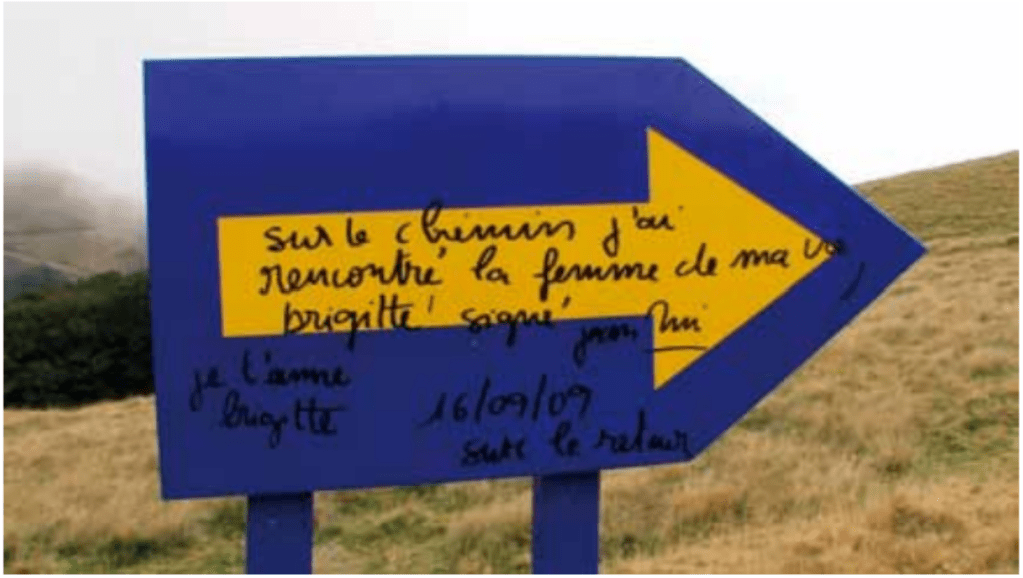
Due to the rise of popularity in backpacking, pilgrimages, and other forms of travel commonly associated with stays in hostels, this is becoming a more and more culturally established rite of passage in the Western mainstream, often permeated by a magical/spiritual vocabulary.
This second act of the hero’s journey and its association with the supernatural could also be tied to forms of travel examined in this article by the fact that many travelers of this kind draw inspiration from Middle Age pilgrims or early European explorers, such as Marco Polo – who famously injected many magical elements to his story of his travels – as the authentic travelers (Frey, 2002). The spiritual dimension, sometimes with a hint of magic, is therefore almost always present in some capacity, mostly due to the popular imagination of this kind of travel from the above inspirations, but also due to its inherent nature.
It is during this act, however, that the traveler reaches the innermost cave, overcomes the main obstacle of the journey, and finds or gains their elixir. It is a long battle occurring, mostly in one’s mind, but as a reaction or response to the external conditions outlined above.
The wrap-up is then, of course, the final act, the Return. The protagonist of the story – which as we said in Western tradition is not peculiar to be oneself – returns back to his/her ordinary world, fully transformed by the adventure. In this final stage of the rite of passage – the incorporation – the hero, equipped with new wisdom and abilities, sheds the old identities and re-enters society with a new status. He/she may now use what was gained on this journey to help people back home.
Of course, the hero can always be resummoned back by old spiritual forces, or drawn involuntarily from his/her ordinary world. The Hero’s Journey then restarts and a new trip begins.
The catalyst and main enablers of this process are the hostels. They sprung up on the main backpacking or pilgrimage trails, in remote places, magical capitals, and towns previously only heard in stories and schools. They give us their beyond-bed magic, which enables and enhances the liminal space; they are the friendly castle protecting us from the dragon we wish to slay.
We want to make “The Hero’s Journey” as meaningful, potent, and transformative for our fellow travelers as possible. So join us on the beyond-bed movement, join us on this collective hero’s journey, transforming the industry that transformed our lives!
Bon voyage and good luck on your adventure!
References:
- Mendel, Tommi. (2010). Foot-pilgrims and backpackers: contemporary ways of travelling. Scripta Instituti Donneriani Aboensis. 22. 288-315. 10.30674/scripta.67372.
- Frey, Nancy Louise. (2002) Santiagopilger unterwegs und danach. Auf den Spuren einer alten Route im heutigen Spanien. Volkach/Main: Verlag Manfred Zentgraf
- Giacobino, Sebastian. (10. March, 2014). Adventurer. https://www.deviantart.com/giacobino/art/Adventurer-439484036
- Mendel, Tommi. (2009). ‘On the Camino I found the love of my life, Brigitte. I love you Brigitte. Signed: Jean-Lui on the way back, 16.09.09.’ https://www.researchgate.net/publication/326888494_Foot-pilgrims_and_backpackers_contemporary_ways_of_travelling



 Beyond-Bed Talk
Leave a comment